Author: E.M. Forster
First Published: 1909
Genre: fiction, short-story Review Date: 24.05.25
First Published: 1909
Genre: fiction, short-story Review Date: 24.05.25
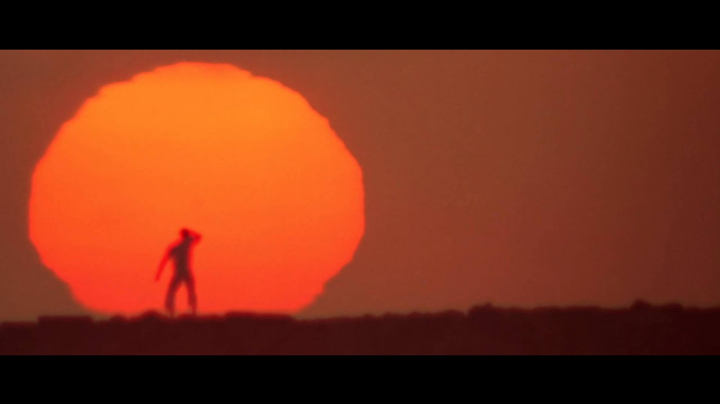
The Machine Stops was published in 1909, one year before humanity gained consciousness:
On or around December 1910, human character changed. I am not saying that one went out, as one might into a garden, and there saw that a rose had flowered or a hen had laid an egg. The change was not sudden and definite like that, but a change there was, nevertheless …
Something was in the water: between 1900-1910, H.G. Wells published his three most prophetic works: Anticipations (1901), Manking in the Making , and A Modern Utopia (1905); in 1907 Henry Adams privately circulated the strange Education of Henry Adams , coining the term 'dynamo'; and Marinetti released his Manifesto of Futurism in 1909. For Aldous Huxley, 1905 was the last point in history where his psychotropic Utopia Pala could remain 'viable', and, perhaps fittingly, 1910 marks the end of the last nominate British Era: Edwardian England.
The Machine Stops is E.M. Forster's rejection of the Wellsian Utopia. It follows the lives of Vashti and her son Kuno in their globe-spanning fully automated city powered by ‘The Machine.’ Each person lives alone in a hexagonal room with all amenities provided by button. Their primary form of stimulus is viewing one another and the pursuit of “ideas” with which to give lectures. Forster believes that humanity will remain intellectual – Vashti is interested in musical history – but nevertheless remains pessimistic that this will provide deeper meaning. People pursue their niche interests and become ever more alienated from the original vital sources of knowledge:
Let your ideas be second-hand, and if possible tenth-hand, for then they will be far removed from that disturbing element – direct observation. Do not learn anything about this subject of mine – the French Revolution. Learn instead what I think that Enicharmon thought Urizen thought Gutch thought Ho-Yung thought Chi-Bo-Sing thought Lafcadio Hearn thought Carlyle thought Mirabeau said about the French Revolution.
Humanity will not only become bloodlessly afraid of physical touch, exertion, natural air, light, and nature, but even the idea of these things unmediated and unfiltered by The Machine. These are the human blobs of Wall-E, the Eloi of The Time Machine , the sterile viewers of The Naked Sun: the last men of Zarathustra:
The opposite of the overman [Übermensch] is the last man: I created him at the same time with that. Everything superhuman appears to man as illness and madness. You have to be a sea to absorb a dirty stream without getting dirty. [Nietzsche, Fragments]
The addiction to comfort and the fear of unmediated touch are represented by the grotesque white “worms” of the Machine’s “Mending Apparatus." The übermensch of the story, Kuno, is strong and willing to risk his own life to see outside the system. He longs to see the sun directly, to breathe the air, and witness nature (which the Machine exterminates routinely). He is a Romantic hero and longs for Wessex. He dreams of the pre-modern English knights, maidens, and farmers who experienced real life. Kuno’s modern avatars are Truman from the Truman Show and the eponymous THX-1138, both of whom would rather die than live in the cave.
Over time, it becomes clear The Machine is causing atrophy in the physical and spiritual powers of mankind. They have lost control of their tools and the Central Committee – ever distant and unavailable – cannot prevent the Machine's disintegration. One day, Kuno announces “The Machine Will Stop” and soon after it begins to implode. Humanity is too weak to live outside once the machine stops supporting them and Vashti, Kuno, and the “moderns” all perish. The only glimmer of hope is the suggestion that people remain above, the “Homeless” who will inherit the Earth once again and will avoid our mistakes.
The Machine Stops is about the danger of comfort and the importance of the physical body. Kuno must rediscover notions like tiredness, “far” and “near”, pain, blood, and danger. He is the mouthpiece for the author’s red-blooded philosophy:
Man's feet are the measure for distance, his hands are the measure for ownership, his body is the measure for all that is lovable and desirable and strong. Then I went further: it was then that I called to you for the first time, and you would not come.
The fear of comfort and the machine, the adulation of physical self-sufficiency and immediate experience: these are core themes of modernity and will be repeated so long as its gears spin. It exists in all debates about modern life: opposed by the radical UNABOMBER, explored in the dialogue of My Dinner With Andre, and depicted in the Last Children of Tokyo. Its purest, most honest form is in Nausicaa: Valley of the Wind where bodily experience, even in a toxic, broken, war-torn world, is preferred over a sterile and planned peace.
It will continue so long as we cannot say No. Modern people cannot give up modern conveniences, until they have to, and then inconvenience becomes normal once again. Aircon, central heating, modern transport, the varieties of food, immense leisure time, instant communication: without them I ask in all honesty, where would we be? Our attachment to them produces a Political Fact which all politicians must accede to, and which will fundamentally constrain any programme of reform, whether the Utopian-agricultural fantasy or the Communist worker’s paradise.